
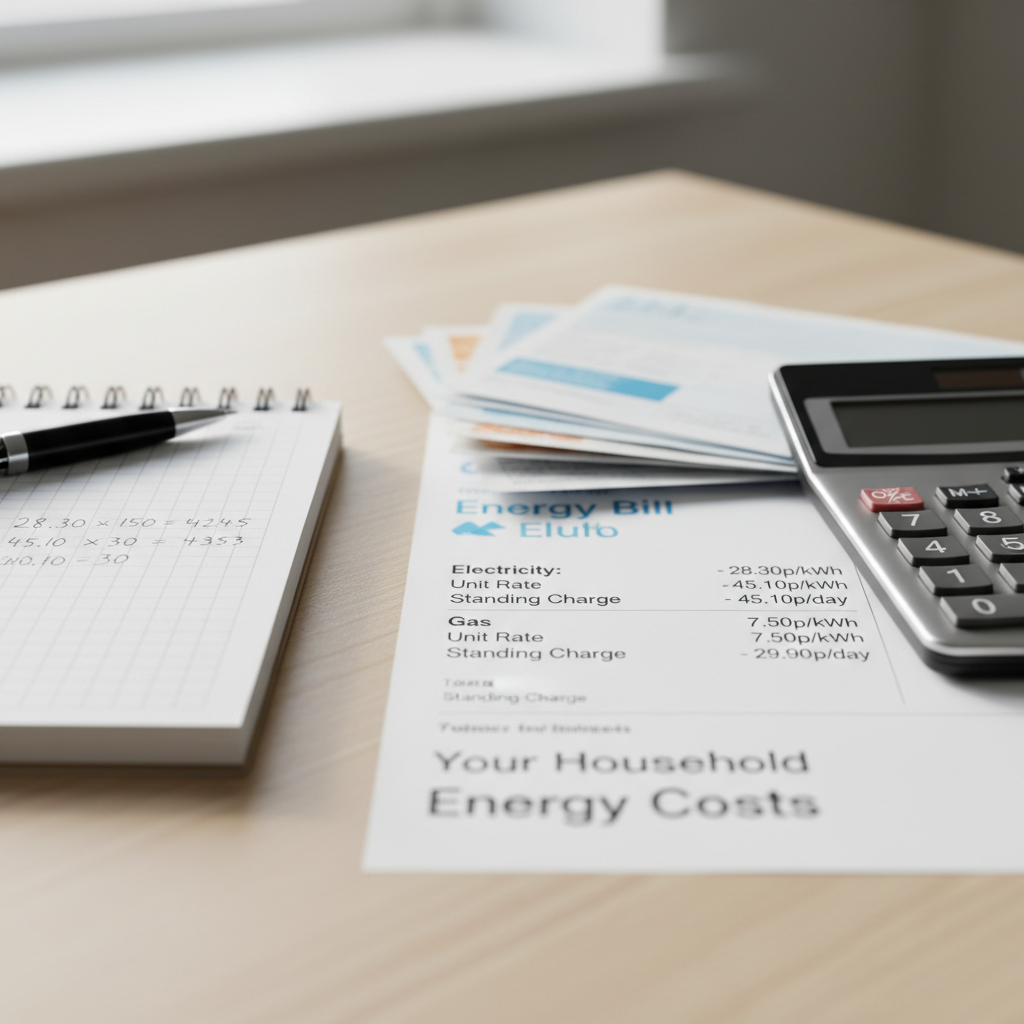
There’s a useful overlap between saving money on energy and reducing your environmental impact — because most of the time, using less energy achieves both at once. Here’s how UK households can make meaningful reductions in their carbon footprint while keeping a close eye on costs.
Heating: The Biggest Win
In most UK homes, heating accounts for around 60% of energy use — and therefore the majority of both the energy bill and the carbon footprint. The highest-impact changes here are:
- Turning down the thermostat by 1°C — can reduce your heating bill by around 10% and cuts gas consumption proportionally
- Insulation — loft insulation and cavity wall insulation are the most cost-effective upgrades available, often funded through the ECO4 scheme for eligible households
- Smart thermostats — devices like Hive or Nest pay for themselves within a year for most households by eliminating heating when no one is home
Switch to Green Energy
Choosing a tariff from a supplier that sources electricity from renewable sources (wind, solar, hydro) doesn’t necessarily cost more — and in some cases, green tariffs are competitively priced with standard ones. Look for suppliers that are 100% renewable-backed and transparent about their energy mix.
Note: “green” tariffs still draw from the same grid, but suppliers match your consumption with renewable generation certificates, which funds the expansion of renewable capacity.
Your Car Is Likely Your Biggest Single Impact
For most UK households, the car dominates personal carbon emissions — more than heating and electricity combined. If you’re due a new car, an electric vehicle charged on a green tariff has a dramatically lower lifetime carbon footprint than a petrol or diesel equivalent. Home charging overnight on an off-peak tariff can cost the equivalent of around 3–4p per mile.
Food and Shopping
Reducing meat consumption — particularly beef and lamb — has a significant impact on food-related emissions. Cutting food waste (the average UK household wastes around £700 of food per year) also helps, as does buying seasonal British produce where possible.
Solar Panels
For homeowners, solar panels represent a long-term investment that generates free, zero-carbon electricity. Current costs are around £5,000–8,000 for a typical installation, with payback periods of 7–10 years. The Smart Export Guarantee means you’re paid for surplus electricity exported to the grid.
Small Changes That Add Up
LED bulbs throughout your home, full loads in the washing machine at 30°C, air-drying laundry instead of tumble drying, and switching off devices fully rather than leaving on standby — none of these individually make a huge difference, but together they can reduce electricity use by 10–15%.
Ready to cut your energy costs? Compare deals today and see how much you could save.


0 Comments